For the entire first month of planning, our backsplash was going to be tile. Specifically, the warm-white zellige we'd already chosen, sized 4x4, running floor-to-ceiling behind the range. We had the sample taped up. We liked it. It was decided.
Then our stone fabricator asked, almost in passing, whether we'd considered taking the quartzite up the wall.
We had not. We hadn't even thought to. A backsplash made from the same slab as the countertop is the kind of detail you see in design magazines and assume is reserved for kitchens with budgets that don't have a top. But once it was in the conversation, we couldn't unsee it — and so we did the responsible thing, which was get a real quote for both options before we made any decisions emotionally.
This post is what came back. The actual numbers. What we picked. And whether we'd do it again.
The two options on paper
To make this a fair comparison, we held the wall area constant: roughly the same square footage of backsplash either way, running behind the range and along the main work wall. Same installer pool. Same install timeline.
What changed was the material — and the finishing it required.
Option 1 — Zellige-style tile
The plan was a warm-white 4x4, hand-glazed for that subtle variation, set with a tight grout line in a color matched to the tile. Classic, forgiving, and the kind of choice that ages without needing apology.
| Line item | Cost |
|---|---|
| Tile (material only) | $1,770 |
| Install (labor + grout + setting) | $2,400 |
| Total — tile | $4,170 |
Reasonable. Predictable. Roughly what we'd budgeted when we started this whole project.
Option 2 — Quartzite slab (matching the countertop)
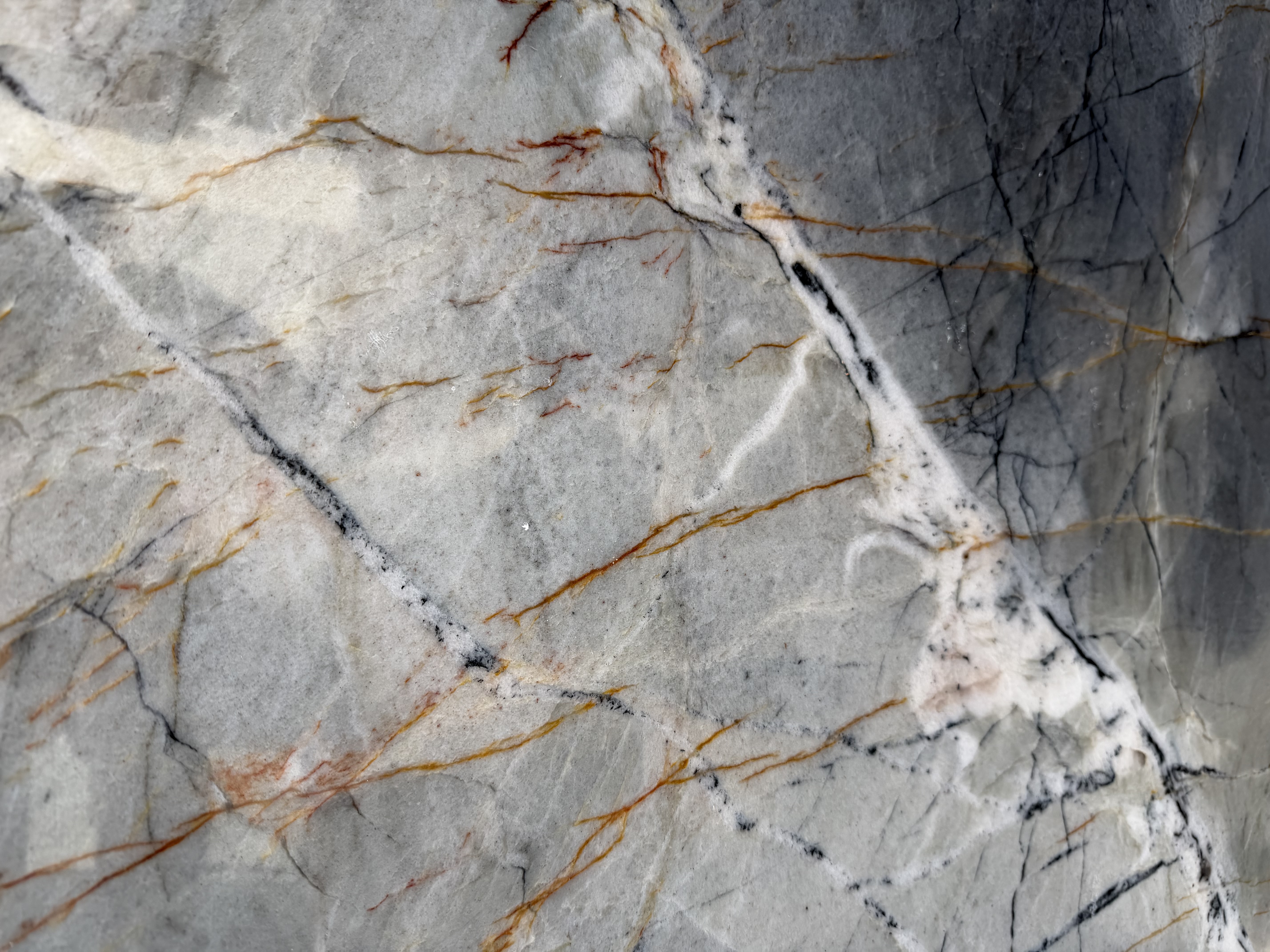
The slab option is exactly what it sounds like — a continuous piece of stone, the same material running across the counter and up the wall behind the range, no seam where the surfaces meet, no grout lines anywhere. Pure visual continuity.
Quartzite ranges wildly in price depending on the stone yard, the pattern, the country of origin, and how dramatic the veining is. Ours sit at the higher end because we picked a specific slab we'd been quietly obsessed with for weeks. We also chose to have it honed (a matte finish, more forgiving than polished) which adds a labor step.
| Line item | Cost |
|---|---|
| Slab (per slab) | $8,000 |
| Honing (matte finishing) | $4,000 |
| Total — slab (minimum) | $12,000 |
And that's the floor — for one slab. If your wall area is larger or the slab can't yield enough usable material in a single piece, you're buying two and the number jumps accordingly. Templating, fabrication, and install were already covered in our countertop quote, so we're not double-counting them here.
The actual gap
So: $4,170 for tile vs. $12,000 for slab. The slab option is roughly 2.9× the cost of the tile option for the same wall.
"Almost three times the price for what is, on paper, the same square footage of vertical surface."
That's the part that stops you. Not because $12K is unimaginable in a remodel — by this point in the process you've stopped flinching at four-figure quotes — but because the alternative is right there, looks beautiful, and saves you nearly $8,000.
What you actually get for the extra money
Once we let ourselves take the slab option seriously, we tried to be honest about what the upcharge buys.
What slab gets you
- One continuous piece — no grout, no seams
- The veining wraps from counter up the wall, which photographs unbelievably well
- Behind the range: nothing for grease, splatter, or steam to settle into
- A finish that reads "custom" the second someone walks in
- Easier to clean than tile (genuinely — one wipe, no grout to scrub)
What tile gets you
- Roughly $8,000 back in your budget
- Easy spot-replacement if a tile cracks in five years
- Texture and warmth that flat stone can't replicate
- An infinitely larger design pool (color, shape, pattern)
- A timeless choice that won't look "of an era" later
What we picked
We went with the slab. I want to tell you it was a clean rational decision but it wasn't, fully — we picked it because the moment we held a piece of the actual quartzite up against the cabinet color, the project we'd been describing in mood boards stopped being a mood board and became a real kitchen.
The honest case for it is this: the backsplash is the most-photographed square footage in a kitchen, it's the surface you face when you're cooking dinner every night for the next decade, and the difference between a great backsplash and a transcendent one is nearly always continuous stone. We had already committed to the quartzite countertop. The marginal cost of taking it up the wall — versus what we'd already spent on cabinets, range, and stone — felt like the correct place to push.
It was still $12,000 we hadn't planned to spend. We trimmed elsewhere. (Future post: what we cut to make this work, including a lighting line item I'm still slightly mourning.)
When tile is the right call (and we'd say so)
The slab made sense for us because of three specific things — and if any of them aren't true for your project, tile is probably the smarter spend.
You're already buying the same stone for the counter. If you're not, you're paying a giant premium for stone that has nothing else to relate to in the room. Don't.
Your wall area can be covered in one or two slabs. The whole point is the seamlessness. If you need three or four slabs to wrap a large kitchen, you're paying for "continuous" without getting it.
You actually love the slab — not the idea of slabs. Pinterest is full of slab backsplashes that are gorgeous in someone else's kitchen and would feel cold in yours. We held our specific slab against our specific cabinets in our specific light before we signed off. If we hadn't, I'd have written a very different post.
If those three boxes don't all check, the $4,170 tile setup is the right answer and you'll be happy with it for years. The zellige we almost picked is in our "if we did this again" file for a reason.
What we used — all linked
Here's everything that went into the decision, including the tile we almost picked. I'll add the as-installed photos and final stone yard credit once everything is finished.
What we chose — slab
What we almost picked — tile
Related decisions in this kitchen
Would we do it again?
Yes — but only because we got the three conditions right. If we'd had to buy a third slab, or if we'd been picking a stone we'd never seen in person, or if the counters had been a different material, it would have been the wrong call and we'd have written a regret post instead.
If you're in the middle of this exact decision: get both quotes. Hold the actual stone against your actual cabinets. Then decide. Don't decide from a Pinterest board.